Meta Llama 4 Unveiled: A Game-Changer in AI Innovation
Imagine a world where artificial intelligence can process millions of words, understand images, and tackle complex problems—all while running efficiently on cutting-edge hardware. That’s no longer a sci-fi dream; it’s the reality Meta has delivered with the release of Meta Llama 4 on April 5, 2025. This latest family of AI models is shaking up the tech landscape, promising to redefine how we interact with machine learning tools. Whether you’re a developer, a business leader, or just an AI enthusiast, Llama 4 is worth your attention. Let’s dive into what makes this release so exciting, how it stacks up against the competition, and why it’s a big deal for the future of AI applications.
What Is Meta Llama 4?
Meta’s Llama 4 isn’t just an upgrade—it’s a leap forward in the evolution of artificial intelligence. Launched on a surprising Saturday, this collection introduces four new models: Llama 4 Scout, Llama 4 Maverick, and the yet-to-be-released Llama 4 Behemoth. Trained on vast datasets of text, images, and videos, these models boast “broad visual understanding” and multimodal capabilities, making them some of the most versatile AI tools yet.
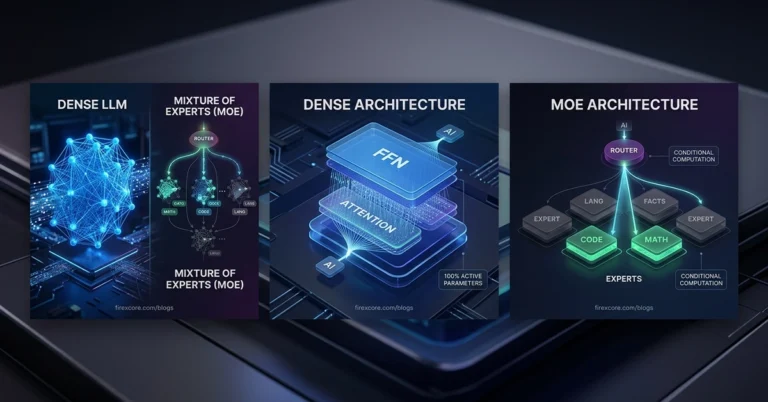
What sets Meta Llama 4 apart? It’s the first in Meta’s lineup to use a Mixture of Experts (MoE) architecture. Think of it like a team of specialists: instead of one giant model handling everything, MoE breaks tasks into smaller chunks and assigns them to “expert” sub-models. This boosts efficiency, cuts down on computational waste, and delivers faster, smarter results. For instance, Maverick has 400 billion total parameters but only activates 17 billion at a time across 128 experts. Scout, meanwhile, manages 109 billion total parameters with 17 billion active ones. Behemoth? It’s a beast with nearly two trillion parameters, poised to dominate when it drops.
Why Meta Llama 4 Matters: A Competitive Edge
The AI race is heating up, and Meta’s not playing around. The push for Meta Llama 4 reportedly intensified after Chinese lab DeepSeek unveiled models like R1 and V3, which rivaled Meta’s previous Llama offerings while slashing deployment costs. Meta scrambled—think war rooms and all-nighters—to crack DeepSeek’s efficiency secrets, and the result is a lineup that’s both powerful and practical.
Meta Llama 4 Scout: The Efficiency Champion
Scout is the lightweight powerhouse of the bunch. With a jaw-dropping 10-million-token context window, it can process massive documents or codebases—think entire encyclopedias or sprawling software projects—in one go. Running on a single Nvidia H100 GPU, it’s perfect for tasks like document summarization or reasoning over complex datasets. Meta claims it outshines Google’s Gemini 2.0 and OpenAI’s GPT-4o in coding and long-context benchmarks. Imagine summarizing a 1,000-page report in seconds—Scout’s got you covered.
Meta Llama 4 Maverick: The Creative Conversationalist
Maverick steps up as the go-to for chat and creative writing. With 400 billion parameters and 128 experts, it’s designed to tackle multilingual tasks, coding challenges, and image-based queries. Meta’s internal tests show it beating GPT-4o and Gemini 2.0 in several areas, though it lags behind top-tier models like Gemini 2.5 Pro. Still, its efficiency-to-performance ratio is a game-changer for developers building AI-driven assistants.
Meta Llama 4 Behemoth: The Future Heavyweight
Still in training, Behemoth is the one to watch. With 288 billion active parameters and two trillion total, it’s already outperforming GPT-4.5 and Claude 3.7 Sonnet in STEM-focused tests like math problem-solving. When it lands, expect it to redefine what’s possible in AI innovation.

Performance Comparison: How Does Meta Llama 4 Stack Up?
Let’s talk numbers. Meta’s internal benchmarks paint an impressive picture, but how does Llama 4 really compare to the big players?
- Scout vs. Competitors: Outpaces Gemini 2.0 and GPT-4o in coding, reasoning, and long-context tasks, thanks to its massive context window.
- Maverick vs. GPT-4o: Edges out OpenAI’s model in creative writing and multilingual performance, but falls short of Claude 3.7 Sonnet’s reasoning depth.
- Behemoth (Projected): Tops GPT-4.5 in STEM skills, though it’s not yet a match for Google’s Gemini 2.5 Pro.
One catch: Meta Llama 4 models aren’t true “reasoning” models like OpenAI’s o1. They prioritize speed over self-checking, which could mean less reliability in tricky scenarios. Still, their multimodal prowess—handling text, images, and soon video—puts them in a league of their own.
Pre-training Meta Llama 4: A New Frontier
The Meta Llama 4 models represent the pinnacle of Meta’s AI efforts, delivering multimodal brilliance at a competitive price point while outperforming much larger competitors. Crafting this next generation of Llama models demanded fresh strategies during the pre-training phase.
For the first time, Llama 4 embraces a Mixture of Experts (MoE) framework. In this setup, each token engages only a portion of the model’s total parameters, making training and inference far more efficient. Compared to traditional dense models, MoE offers superior quality within the same computational budget. Take Llama 4 Maverick, for example: it boasts 400 billion total parameters but activates just 17 billion at a time, using a blend of dense and MoE layers with 128 routed experts plus a shared one.
This means only a fraction of parameters kick into action per task, slashing serving costs and latency. Maverick can even run smoothly on a single NVIDIA H100 DGX system—or scale up with distributed inference for peak performance.
Multimodality is baked into Llama 4 from the ground up, thanks to early fusion, which merges text and vision tokens into a cohesive backbone. This leap forward allowed us to pre-train the models on massive, unlabeled datasets spanning text, images, and videos. We also upgraded the vision encoder—built on MetaCLIP but fine-tuned alongside a static Llama model—to better sync with the language model.
A new technique, dubbed MetaP, helped us nail down key hyper-parameters like per-layer learning rates and initialization scales, which proved adaptable across varying batch sizes, model dimensions, and token counts. Llama 4 was pre-trained on 200 languages—over 100 with more than a billion tokens each—using 10 times more multilingual data than Llama 3, setting the stage for robust open-source fine-tuning.
Efficiency was a priority, too. By leveraging FP8 precision, we maintained quality while hitting 390 TFLOPs/GPU during Behemoth’s pre-training on 32K GPUs. The training data? A whopping 30 trillion tokens—double Llama 3’s mix—covering a rich blend of text, images, and videos. We also introduced a “mid-training” phase with tailored recipes, including specialized datasets for long-context tasks, boosting both quality and Scout’s industry-leading 10-million-token context length.
Post-training: Fine-Tuning for Excellence
Meta Llama 4 offers a spectrum of models tailored to diverse needs. Llama 4 Maverick, the flagship for chat and assistant roles, shines in image and text comprehension, powering advanced AI apps that break language barriers. With 17 billion active parameters, 128 experts, and 400 billion total parameters, it delivers top-tier performance at a fraction of Llama 3.3 70B’s cost. It outclasses GPT-4o and Gemini 2.0 in coding, reasoning, multilingual tasks, long-context processing, and image benchmarks, holding its own against DeepSeek v3.1.
Post-training Maverick was tricky—balancing modalities, reasoning, and chat skills took finesse. We crafted a curriculum strategy to preserve performance across inputs, revamping our pipeline: lightweight supervised fine-tuning (SFT), online reinforcement learning (RL), then lightweight direct preference optimization (DPO). Overdoing SFT and DPO risked stifling RL exploration, so we axed over 50% of “easy” data (judged by Llama models) and focused on tougher prompts. During multimodal RL, we targeted harder challenges, using a continuous online RL approach—training, filtering medium-to-hard prompts, and iterating. A final lightweight DPO polish tackled edge cases, landing Maverick as a leading chat model with stellar intelligence and vision capabilities.
Meta Llama 4 Scout, the smaller sibling, packs 17 billion active parameters, 16 experts, and 109 billion total parameters. It’s a standout in its class, stretching context length from Llama 3’s 128K to a groundbreaking 10 million tokens. This unlocks feats like multi-document summaries, personalized task parsing, and deep code analysis. Pre- and post-trained with a 256K context, Scout excels in length generalization, thanks to innovations like iRoPE architecture—interleaved attention layers sans positional embeddings, paired with inference-time temperature scaling. It beats peers in coding, reasoning, and image tasks, surpassing all prior Llama models.
Both models were trained on diverse image and video stills for rich visual understanding, handling up to 48 images in pre-training and eight in testing. Scout excels at image grounding, linking prompts to visual elements for precise answers, enhancing user intent comprehension. Available on llama.com and Hugging Face, these models pave the way for human-AI connection, with broader cloud and edge support coming soon.
Scaling Up: Llama 4 Behemoth
Meet Meta Llama 4 Behemoth, a preview of our 2-trillion-parameter titan. With 288 billion active parameters and 16 experts, this multimodal MoE model dominates non-reasoning tasks like math, multilingual processing, and image benchmarks. It played “teacher” to Maverick via codistillation, boosting quality with a dynamic loss function blending soft and hard targets. Pre-training efficiencies offset Behemoth’s hefty compute demands, while forward passes on new data kept student models sharp.
Post-training a 2T-parameter giant was no small feat. We pruned 95% of SFT data—far more than the 50% for smaller models—focusing on quality. Lightweight SFT followed by heavy RL, with a curriculum of escalating prompt difficulty, supercharged reasoning and coding skills. Dynamic filtering axed low-value prompts, and mixed batches honed versatility. Sampling varied system instructions preserved instruction-following prowess. Scaling RL meant rethinking infrastructure: optimized MoE parallelization, an asynchronous training framework, and flexible GPU allocation slashed inefficiencies, delivering a 10x training boost over past generations.
Controversial Tweaks: Less Refusal, More Balance
Here’s where things get spicy. Meta’s tuned Llama 4 to say “no” less often. Unlike its predecessors, which dodged contentious political or social questions, Meta Llama 4 dives in—carefully. The company claims it’s “dramatically more balanced,” responding to debated topics without judgment. Refusal rates reportedly dropped from 7% to under 2%, rivaling xAI’s Grok in neutrality.
This shift comes amid criticism from figures like Elon Musk, who’ve called out AI chatbots for being “too woke.” Meta’s response? A model that’s responsive yet factual, dodging the bias trap that’s plagued others. But can AI ever truly be neutral? That’s a question worth pondering.
Accessibility and Limitations
Meta Llama 4 Scout and Maverick are out now on Llama.com and Hugging Face, powering Meta AI across WhatsApp, Messenger, and Instagram in 40 countries. Multimodal features? U.S.-only for now, in English. But there’s a catch: the EU’s locked out due to strict AI laws, and companies with over 700 million monthly users need Meta’s blessing to use it. Not exactly “open source” in the purest sense, but it’s a start.
Key Takeaways and What’s Next
Meta Llama 4 is a bold step into the future of artificial intelligence. Its MoE architecture, massive context windows, and multimodal capabilities make it a standout in the crowded AI field. Scout and Maverick are here to impress, while Behemoth looms as a potential titan. For developers, it’s a chance to build smarter, faster tools; for businesses, it’s a cost-effective way to harness automation.
What’s next? Keep an eye on LlamaCon, Meta’s AI conference on April 29, 2025, for Behemoth’s debut and more. The AI race is far from over, and Meta’s just getting warmed up.
Curious about Meta Llama 4’s potential? Share your thoughts in the comments or dive deeper into AI trends on our blog!
Frequently asked questions.
Answers connected directly to this article and its subject.
01 What is Meta Llama 4?
Llama 4 is Meta’s latest family of AI models, featuring Scout, Maverick, and Behemoth, built for text and image processing with a Mixture of Experts architecture.
02 How does Llama 4 compare to GPT-4o?
Llama 4 Maverick beats GPT-4o in coding and creative tasks but lags behind in advanced reasoning compared to models like Claude 3.7 Sonnet.
03 What’s unique about Llama 4 Scout?
Scout offers a 10-million-token context window, ideal for processing huge documents or codebases, and runs on a single Nvidia H100 GPU.
04 When will Llama 4 Behemoth be released?
Behemoth is still in training, with a potential reveal at LlamaCon on April 29, 2025.
05 Why can’t EU users access Llama 4?
EU restrictions stem from strict AI and data privacy laws, limiting its distribution there.