- Mastering GEO, AIO, and AEO to Rank in 2025
- The AI Revolution in Search
- Understanding Generative Engine Optimization (GEO)
- Mastering AI Optimization (AIO)
- Deep Dive into Answer Engine Optimization (AEO)
- Ranking in Google’s AI Overviews (SGE)
- The Enduring Importance of Technical SEO
- Content Creation Best Practices for 2025 SEO
- How to Rank Quickly on AI Answers
- Essential AI SEO Tools for 2025
- The Future of Search & SEO in the AI Ecosystem
- Final Checklist & Key Takeaways
- SEO 2025 Checklist: GEO, AIO & AEO
TL;DR:GEO (Generative Engine Optimization) prepares your content to be cited by AI answer engines (Google SGE, ChatGPT, Perplexity). Use question-based headings, short answer-first paragraphs, FAQ schema, and data-backed evidence to increase citation likelihood
Mastering GEO, AIO, and AEO to Rank in 2025

Generative Engine Optimization
Optimize content for AI-driven platforms like ChatGPT, Google SGE, and Perplexity to ensure citation and visibility in AI-generated answers. Learn more about Search Engine Optimization (SEO).
AI Optimization
Align content with AI mechanisms through token efficiency, embedding relevance, and contextual authority for better machine understanding. Explore Artificial Intelligence for deeper insights.
Answer Engine Optimization
Focus on structured data, FAQ blocks, and concise answers to rank in AI-powered Q&A and featured snippets across platforms.
The AI Revolution in Search
The New Search Landscape
The search landscape in 2025 is undergoing a profound transformation, driven by the pervasive integration of Large Language Models (LLMs) and generative AI technologies into mainstream search engines. [3] [101]
Key Insight: Traditional search methodologies, heavily reliant on keyword matching and link-based authority, are being augmented by AI-driven approaches that prioritize understanding user intent, contextual relevance, and the generation of direct, comprehensive answers.
From Keywords to Intent
The advent of sophisticated LLMs in search is accelerating a pre-existing trend: the shift from keyword-centric optimization to a focus on user intent and conversational queries. [80] [102]
“AI-powered search engines are exceptionally adept at understanding the nuances of natural language, the context behind a query, and the underlying goal of the user.”
The Rise of Zero-Click Answers
A significant consequence of AI’s integration into search is the increasing prevalence of “zero-click” answers, where users receive information directly on the search engine results page (SERP), eliminating the need to visit a specific website. [3] [101]
Impact on SEO Strategy:
- Focus shifts from driving clicks to ensuring content citation in AI Overviews
- Brand visibility through AI-generated summaries becomes crucial
- Content must be structured for direct answerability and AI readability
- E-E-A-T (Expertise, Authoritativeness, Trustworthiness) signals become more critical. Learn about Cybersecurity to enhance trust signals.
Understanding Generative Engine Optimization (GEO)
Generative Engine Optimization (GEO) is an emerging discipline within digital marketing focused on enhancing the visibility and influence of digital content within the responses generated by AI-driven platforms. [3]
GEO vs. Traditional SEO: Key Differences
| Feature | Traditional SEO | Generative Engine Optimization (GEO) |
|---|---|---|
| Primary Goal | Rank higher on SERPs (list of links) | Get content cited in AI-generated answers [1], [6] |
| Target Engines | Google, Bing (traditional) | ChatGPT, Perplexity, Google SGE, Bing Copilot, Gemini, Claude [1] |
| Content Focus | Keyword optimization, backlinks, on-page elements | Context-driven content, AI readability, authority, structure [1] |
| User Interaction | Typically requires click-through to website | Often zero-click, direct answer from AI [1] |
| Key Metrics | CTR, bounce rate, time on page, organic traffic [6] | Citation visibility, relevance in AI answers, brand mentions [6] |
| Query Type | Often concise keywords | Conversational, long-tail, question-based queries [7] |
Content Formats for GEO Success
FAQ Sections
Highly valuable because they directly mirror the Q&A format that many AI tools use to present information. [90] [91]
Data-Backed Content
Content backed by original data, statistics, case studies, or unique research is highly valued by AI, as it provides verifiable and trustworthy information. [83] Explore our Data Analysis services for insights.
Best Practices for GEO Content:
- Structure content with clear questions as headings (H2, H3 tags)
- Provide concise, direct answers immediately following each question
- Use bullet points, numbered lists, and tables for enhanced AI readability
- Break content into modular, answerable chunks with short paragraphs (2-3 sentences)
- Keep sentences concise (under 20 words) for better token efficiency
How LLMs Retrieve and Cite Content
Understanding how Large Language Models (LLMs) retrieve and cite content is fundamental to effective GEO. LLMs engage in a complex process that involves interpreting queries, retrieving relevant information, and synthesizing this information to generate coherent responses. [71]
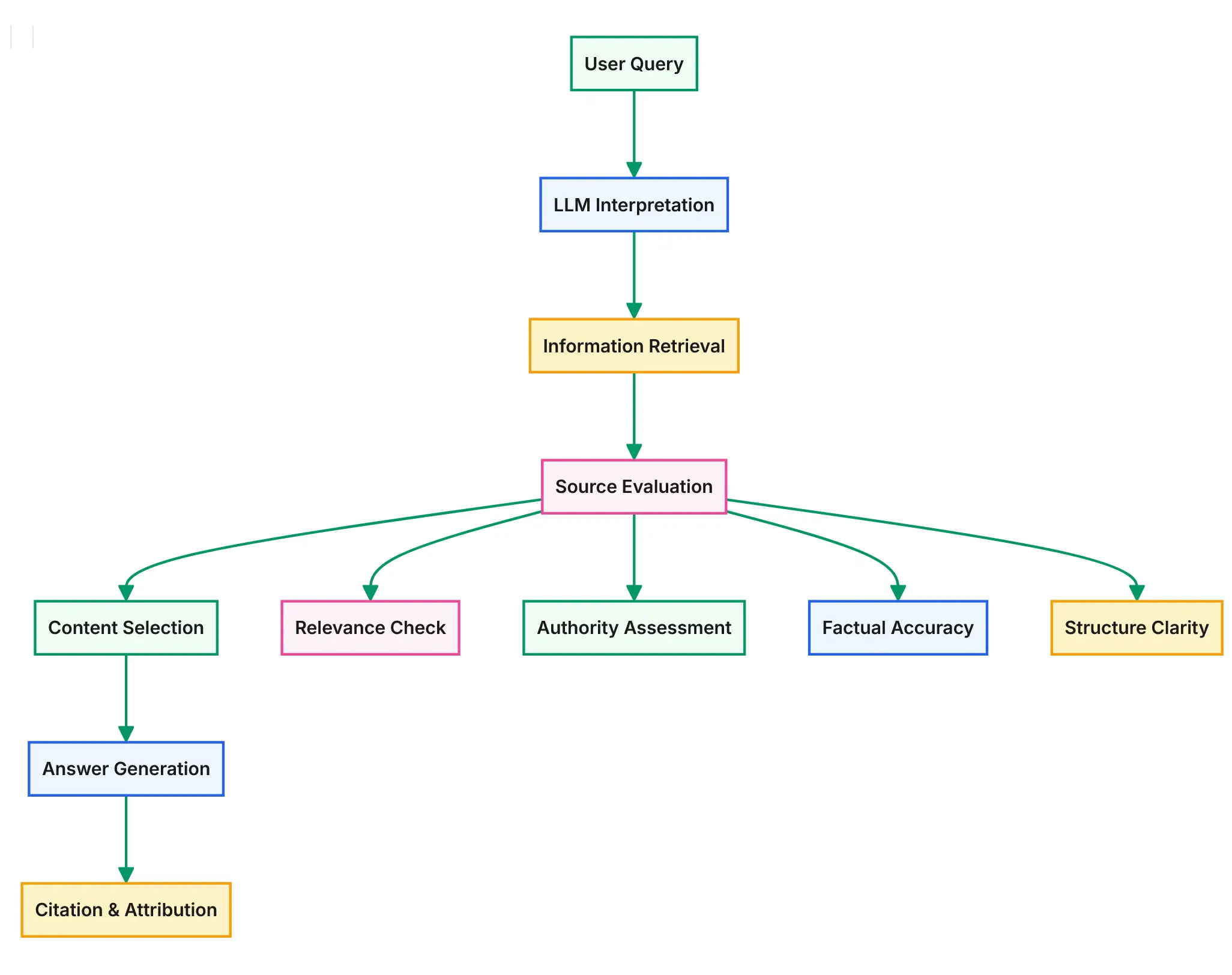
The citation mechanisms vary between AI platforms. Perplexity provides direct citations to sources, while Google’s SGE also aims to cite sources within its AI Overviews. [72] [101]
Mastering AI Optimization (AIO)
Artificial Intelligence Optimization (AIO) is a technical discipline focused on enhancing the structure, clarity, and retrievability of digital content specifically for Large Language Models (LLMs). [13] Discover our AI Optimization solutions.
Token Efficiency
AIO prioritizes efficient use of tokens, reducing redundancy while preserving clarity. This ensures content is interpreted precisely and economically by AI systems.
Embedding Relevance
Improves semantic strength and topical coherence of embeddings, helping AI generate robust and relevant representations of content.
Contextual Authority
Content demonstrating clear topical focus, internal consistency, and alignment with authoritative concepts is weighted more heavily by AI.
Prompt Compatibility
Optimizing content to reflect common linguistic patterns and user queries improves chances of inclusion in synthesized AI responses.
Practical AIO Implementation
Content Structure Best Practices:
- Use clear, hierarchical headings (H1, H2, H3 tags) to break down content
- Keep paragraphs short (ideally 2-3 sentences) and sentences concise (under 20 words)
- Employ bullet points and numbered lists for presenting information in digestible pieces
- Use plain language and avoid overly complex sentence structures
- Implement an “answer-first” approach, especially for informational queries
Key Insight: A well-structured piece of content acts like a roadmap for AI, guiding it to key insights efficiently. The goal is to make content not only valuable to human readers but also meticulously structured for AI comprehension and retrieval. [1]
The Importance of Modular Content
Creating modular and answerable content chunks is crucial for AI optimization. LLMs excel at identifying and extracting specific pieces of information that directly address user queries. By structuring content into discrete, self-contained modules, websites can significantly enhance their content’s “answerability” and citation potential.
Example: Email Marketing Best Practices
Modular Structure:
- Building an Email List
- Crafting Effective Subject Lines
- Designing Mobile-Responsive Emails
- Analyzing Campaign Performance
AI Benefits:
- Easy extraction of specific information
- Clear context for each topic
- Improved citation likelihood
- Better user experience
Deep Dive into Answer Engine Optimization (AEO)
Answer Engine Optimization (AEO) is a specialized facet of AI Optimization that specifically targets AI-powered systems designed to provide direct, concise answers to user queries, such as ChatGPT, Perplexity, and Google’s AI Overviews. [13]
Key AEO Strategies
Schema Markup
Implement FAQPage, HowTo, and Article schemas to provide explicit clues to AI crawlers about content meaning and structure. Consult our IT Consulting for implementation support.
Structured Data
Use organized formats like tables, lists, and JSON-LD to make data easily machine-readable and predictable for AI processing.
FAQ Blocks
Structure content in Q&A format enhanced with FAQPage schema to directly address common user questions with concise answers.
Balancing Conciseness and Depth
A critical challenge in AEO is striking the right balance between providing concise, direct answers that AI can easily extract, and offering sufficient depth to establish authority.
Concise Answers:
- Direct responses to questions
- 1-2 sentence summaries
- Easy AI extraction
- Quick information retrieval
Supporting Depth:
- Examples and evidence
- Data and statistics
- Broader context
- E-E-A-T demonstration
Ranking in Google’s AI Overviews (SGE)
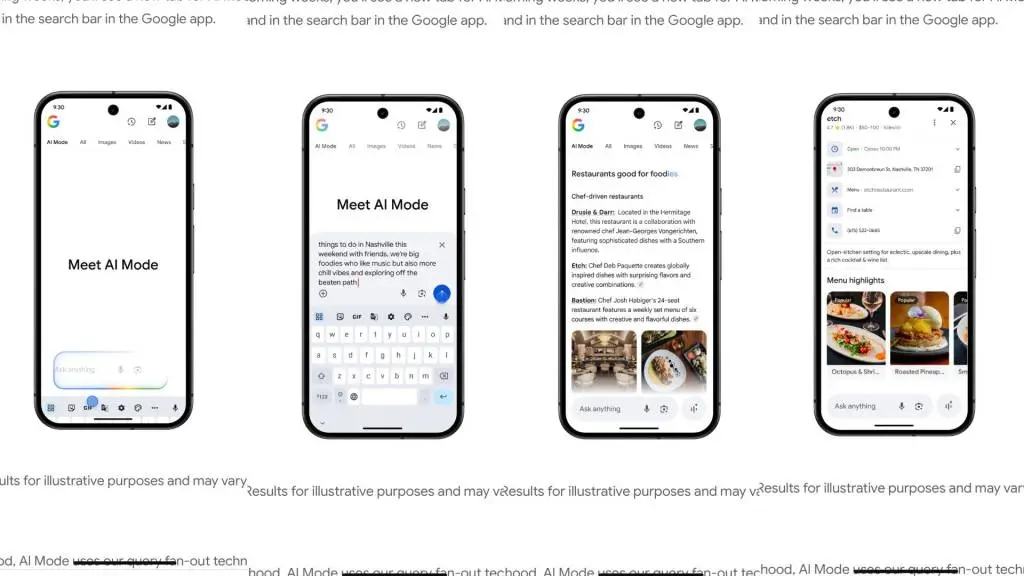
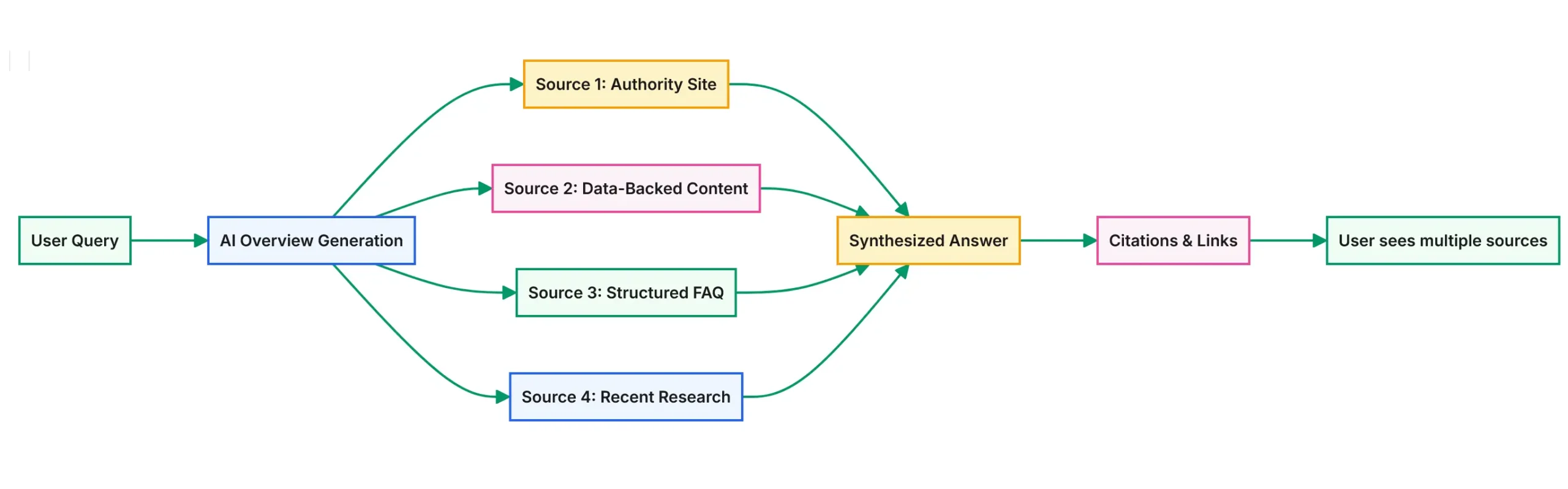
Google’s AI Overviews aim to provide users with direct, comprehensive answers by synthesizing information from various web sources. Understanding what content gets cited is crucial for SEO success.
What Content Gets Cited in SGE?
High-Value Content Characteristics:
- Authoritative and well-structured content demonstrating strong E-E-A-T signals. See our Projects for examples.
- Unique insights, proprietary data, or original research that provides fresh perspectives
- Technically sound pages with fast load times, mobile-friendliness, and proper schema markup
- Well-structured FAQs, authoritative summaries, and data-backed content
- Content broken down into easily digestible chunks using clear headings and lists
Early SGE Patterns
Early observations reveal that SGE tends to generate link-heavy summaries, citing multiple sources to support information presented. The AI synthesizes information from various high-quality sources to construct comprehensive answers. [15]
Experience, Expertise, Authoritativeness, and Trustworthiness. Crucial for content selection, especially for YMYL topics. [15]
Freshness
Regularly updated content reflecting latest information, trends, and data points is more likely to be considered relevant.
Factual Clarity
Well-researched, fact-checked, and unambiguous content. Inaccuracies can severely hinder citation chances.
“AI Overviews are designed to highlight helpful, reliable information, making E-E-A-T, freshness, and factual clarity core components of that reliability.”
The Enduring Importance of Technical SEO
Despite the rise of AI-driven search, technical SEO remains foundational for achieving visibility, including within AI-generated answers and summaries. AI models rely on web crawlers to discover, access, and interpret website content. Learn more about our Infrastructure solutions.
Core Technical Requirements
- Site speed and mobile-friendliness
- Secure HTTPS connection
- Well-structured XML sitemap
- Clean site architecture with logical internal linking
- Proper implementation of structured data (schema markup)
Crawlability & Indexability
- Ensure JavaScript-rendered content is accessible to crawlers
- Regular audits using Google Search Console and Bing Webmaster Tools
- Address crawl errors and broken links
- Correct robots.txt configurations
- Monitor for technical issues
Tools for Monitoring AI-Generated Citations
As AI-generated answers become more prevalent, tracking how and where your content is cited is crucial for understanding AI visibility and refining GEO strategy. Discover our Data Analysis tools for tracking.
Google Search Console
Provides data on impressions and clicks for links appearing within AI Overviews
Writesonic’s GEO Tool
Measures brand visibility across multiple AI search engines, tracking unlinked mentions [172]
Mangools AI Search Grader
Evaluates brand visibility across ChatGPT and Google Gemini [200]
Rankability’s AI Analyzer
Tests prompts across answer engines to see how pages are cited [205]
Peec AI
GEO/LLMO analytics platform tracking brand appearances with share-of-voice analysis
Social Listening Tools
Brand24 or Mention can detect brand appearances in AI-driven content [204]
Content Creation Best Practices for 2025 SEO
Formatting for Answerability
Best Practices for AI-Friendly Content:
- Use question-based headings (H2, H3) that directly mirror user queries. Read more on URL structure.
- Provide concise, direct answers immediately following question headers
- Employ bullet points and numbered lists for breaking down complex information
- Include TL;DR (Too Long; Didn’t Read) summaries at the beginning of sections
- Keep paragraphs short (2-3 sentences) and sentences concise (under 20 words)
Example: Question-Based Heading Structure
Instead of: “Benefits of Exercise”
Use: “What are the top 5 health benefits of regular exercise?”
Hybrid Content: Editorial Excellence + Structured Data
Successful SEO content in 2025 will increasingly be a hybrid model that marries editorial excellence with robust structured data. Check our 5 Powerful Tips for WordPress SEO.
Editorial Excellence
- Well-researched and engaging content
- Authoritative and genuinely helpful
- In-depth exploration of topics
- Unique insights or perspectives
- Demonstrates expertise and trustworthiness (E-E-A-T)
Source: [47]
Structured Data
- Schema markup (Article, FAQPage, HowTo, Product)
- Explicit context for AI crawlers
- Easier information extraction
- Enhanced rich results
- Better AI interpretation and citation
Key Insight: This hybrid approach ensures content is valuable to human readers while being optimized for AI consumption, creating synergy between human-centric content and machine-readable structure.
Prioritizing User Intent & Entity Optimization
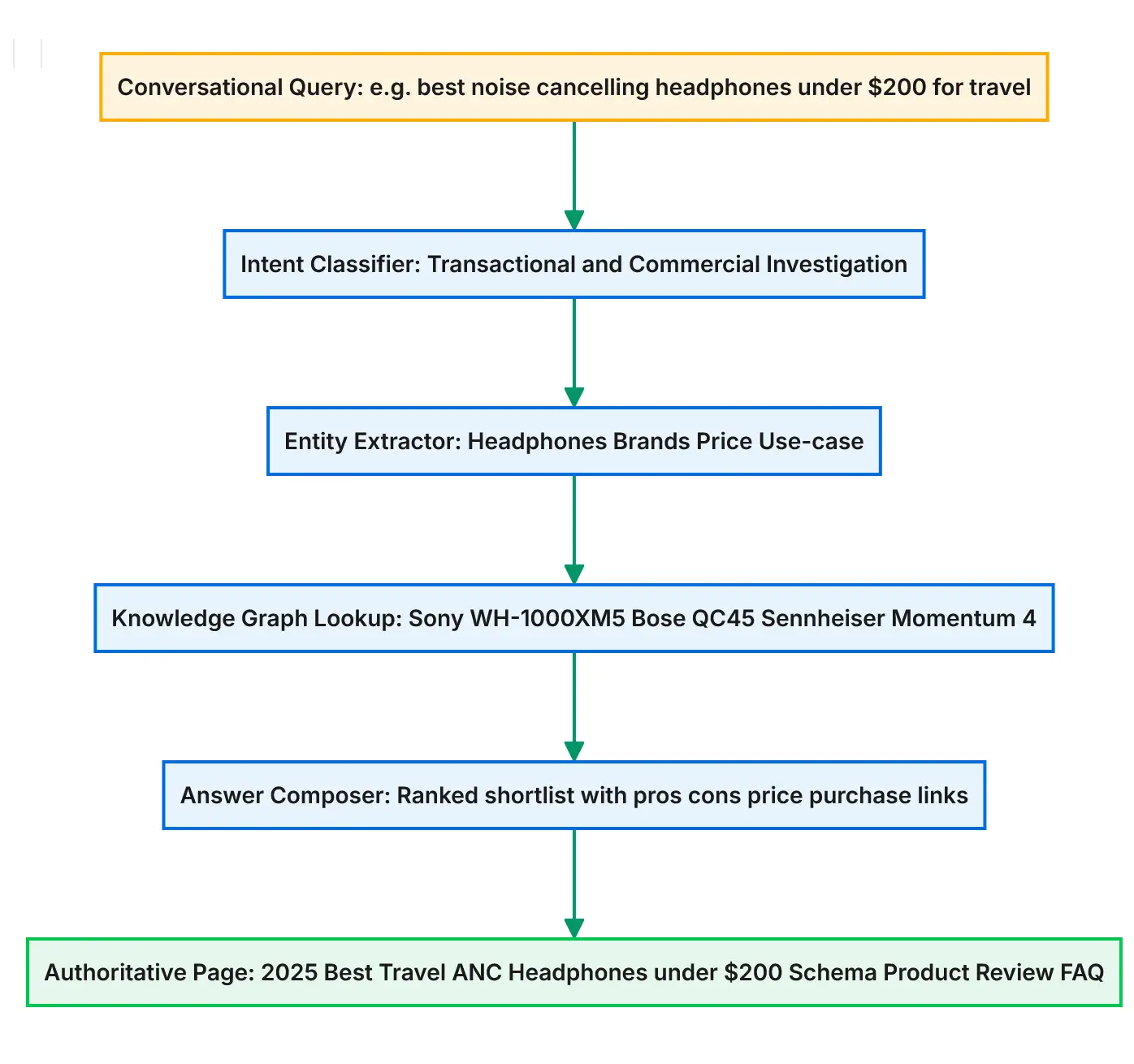
User Intent Optimization:
The era of AI-driven search demands a fundamental shift from keyword-centric strategies to deep understanding of user intent. AI models are exceptionally skilled at discerning the underlying goal or problem a user is trying to solve. [80] [102]
Avoid:
- Keyword stuffing
- Unnatural keyword placement
- Content optimized solely for specific phrases
- Ignoring conversational queries
Focus On:
- Comprehensive topic coverage
- Natural language answers
- Conversational query responses
- Problem-solving content
Entity Optimization for AI
Entity optimization helps search engines and LLMs better understand core concepts, people, places, and things discussed within content, and how they relate to each other.
Entity Optimization Techniques:
- Clearly define and disambiguate key entities within content
- Use consistent canonical names for entities
- Provide clear definitions or descriptions
- Use structured data like Person, Organization, Place, or Event schema
- Link to authoritative sources when appropriate
How to Rank Quickly on AI Answers
Achieving rapid visibility in AI-generated answers requires adopting new strategies focused on clarity, authority, and direct answerability across various AI platforms.
Google AI Overviews
- Clear, direct content with question headers
- Strong E-E-A-T signals
- Technical SEO foundation
- Structured data implementation
ChatGPT
- Exceptional readability
- Strong online reputation
- Prompt engineering principles
- Technical SEO fundamentals
Perplexity AI
- Strong domain authority
- Content freshness
- Factual accuracy
- Clear structure and citations
Platform-Specific Optimization Strategies
Google AI Overviews (SGE)
Google states that websites don’t need to do anything special beyond following existing SEO guidelines, but certain strategies increase citation likelihood. [270]
- Create clear, direct content that answers questions concisely and accurately
- Use headers like “What is…”, “How it works…”, or “Advantages of…” with succinct answers
- Lead with clear 1-2 sentence summaries in the first paragraph
- Ensure technical SEO health and mobile-friendliness
- Implement structured data (Schema Markup) for FAQs, articles, products
ChatGPT Optimization
Focus on creating content that is exceptionally easy for AI to read, understand, and summarize. [244]
- Use clear headlines mirroring user queries
- Short paragraphs (one to two sentences ideal)
- Focus on one idea per section
- Plain language over jargon or complex sentences
- Summarize key points using bullet points or bold text
- Build strong online reputation and brand mentions
Perplexity AI Strategy
As an “answer engine” that prioritizes direct, cited responses, optimization focuses on authority and clarity. [302]
- Build strong domain authority through high-quality backlinks
- Ensure content freshness with regular updates
- Use clear, descriptive headings and bullet points
- Provide clear attribution for claims and proper citations
- Optimize for conversational, long-tail queries
- Create comprehensive coverage of topics
Essential AI SEO Tools for 2025
The rapid evolution of search, driven by generative AI and LLMs, necessitates a new suite of tools for SEO professionals to optimize for AI-driven search platforms and track performance.
Tools for Tracking AI Citations and Visibility
HubSpot’s AI Search Grader
Free tool that analyzes site visibility in AI search tools, revealing how AI models view products or services.
Free Tier Available
KAI Footprint
Helps brands understand visibility in AI-generated search results across models like ChatGPT, Perplexity, and Google AI.
AI Brand Analytics
Semrush AI Toolkit
Priced at $99/month per domain, tracks AI mentions and provides AI-driven insights for improvement.
Premium Tool
These tools help SEOs monitor their brand’s presence within AI-generated responses, offering insights into how AI models perceive and utilize their information, including citation frequency, sentiment, and competitive positioning.
Tools for AI Content Optimization
AI Content Optimization Features:
Structure & Clarity:
- NeuronWriter – semantic models and NLP optimization
- Frase.io – content briefs and AI-driven optimization
- Surfer SEO – real-time optimization feedback
Keyword & SERP Analysis:
- Clearscope – NLP-based search intent analysis
- Ahrefs Keywords Explorer – AI-supported keyword metrics
- Semrush Keyword Magic Tool – AI for smart keyword research
Emerging GEO-Specific Tools
As GEO gains traction, specialized platforms are emerging to help businesses optimize specifically for generative AI models:
Geordy.ai
Focuses on content transformation for AI readiness, generating files that format content for AI accessibility and enabling precise, automatic, AI-first indexing.
AthenaHQ
Positions itself as pioneering GEO, offering insights and tools tailored to this new optimization paradigm.
The Future of Search & SEO in the AI Ecosystem
The Rise of AI Companions and Chat-Based Browsing
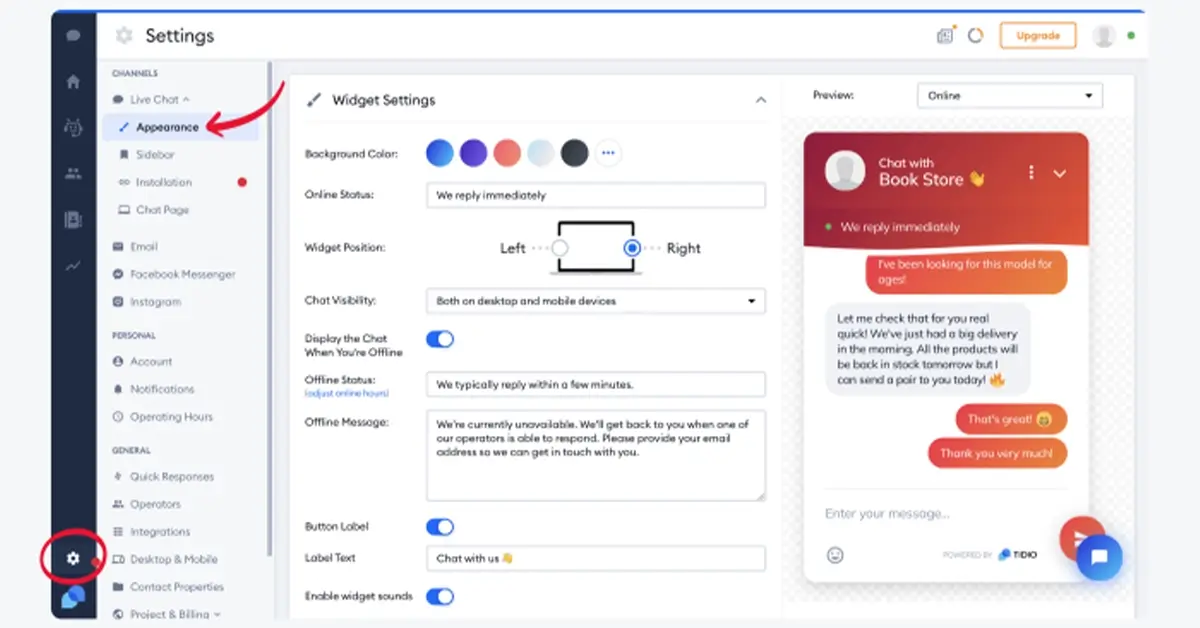
The future of search is increasingly leaning towards AI companions and chat-based browsing experiences, fundamentally altering how users interact with information online. Instead of typing keywords into a search box, users will increasingly engage in natural language conversations with AI assistants.
Implications for SEO:
- Content must be optimized for dynamic, conversational interactions
- Focus on comprehensive, trustworthy, and easily summarizable information
- Greater emphasis on zero-click interactions
- Need for answerability, context-awareness, and personalization
- Long-term trust-building with AI systems becomes crucial
The Impact of Vertical AI Tools
The proliferation of vertical AI tools—AI applications specialized for specific industries or tasks—is poised to significantly impact user search behavior and SEO strategies. Explore our Industrial SaaS Platforms.
Industry-Specific AI
- Medical AI for healthcare queries
- Financial AI for investment advice
- Legal AI for regulatory information
- Technical AI for coding assistance
- Educational AI for learning content
Optimization Requirements
- Accurate and comprehensive data feeds
- Specialized content formats
- Deeply specialized, expert-level content
- Industry-specific credentials and authority
- Focused vertical optimization strategies
“This trend could lead to a fragmentation of search traffic, with queries moving away from traditional search engines towards specialized vertical AI platforms, requiring more targeted and specialized SEO approaches.”
The Growing Importance of Brand Footprint and NLU Signals
In an AI-driven search ecosystem, the overall brand footprint and signals that enhance Natural Language Understanding (NLU) will become increasingly critical for SEO success. [83] [101] Enhance your brand footprint with our Cybersecurity expertise.
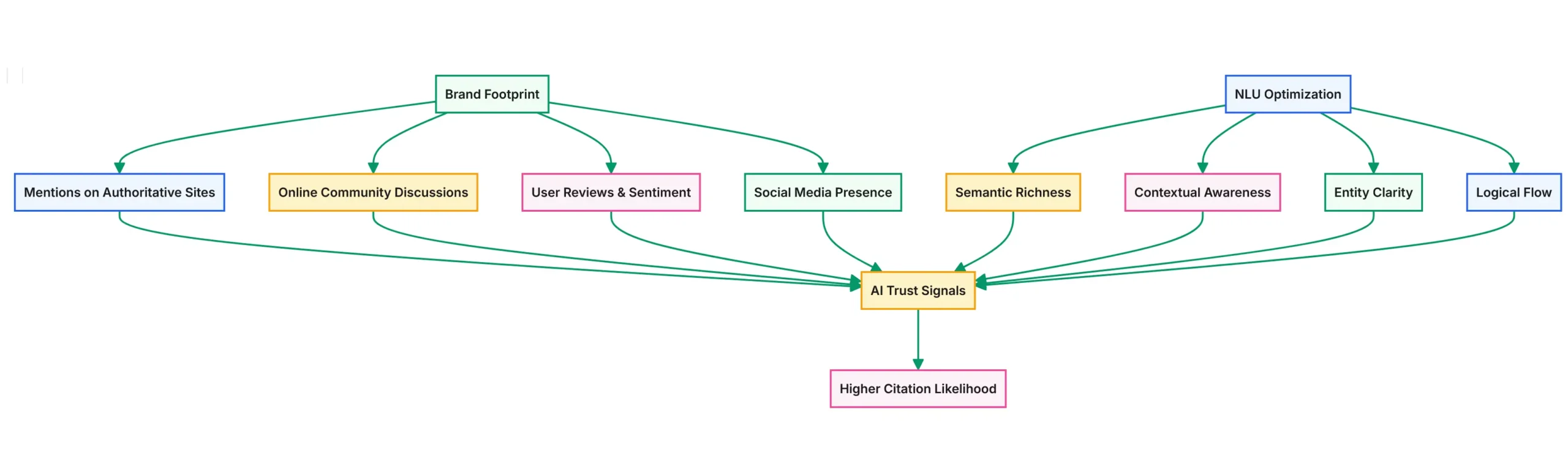
Key Strategies for Brand Footprint Enhancement:
- Build robust online reputation across multiple platforms
- Secure mentions on authoritative third-party websites
- Engage in relevant online communities and discussions
- Manage user reviews and social media sentiment
- Create content optimized for NLU with clear, unambiguous language
- Focus on entity optimization and semantic relationships
Final Checklist & Key Takeaways
Summary of Best Practices for GEO, AIO, and AEO
| Optimization Type | Key Focus Areas | Core Strategies |
|---|---|---|
| GEO | Visibility & citation in AI-generated answers | Create authoritative, data-backed content; use FAQ & Q&A formats; ensure factual accuracy; build strong brand reputation & E-E-A-T; optimize for conversational queries. [3], [83] |
| AIO | Aligning content structure with AI mechanisms | Prioritize token efficiency; enhance embedding relevance; build contextual authority; ensure canonical clarity; optimize for prompt compatibility. [13] |
| AEO | Optimizing for direct answers in AI-powered Q&A | Implement schema markup; structure content with clear, concise answers first; use question-based headings. [13] |
Key Overarching Principles:
- Content Quality & Authority: Prioritize comprehensive, well-researched, expert-level content demonstrating strong E-E-A-T
- Technical SEO Foundation: Ensure website is technically sound, crawlable, fast, mobile-friendly, with proper schema markup
- User-Centricity: Focus on providing genuine value by solving user problems and answering questions thoroughly
- Adaptability: Continuously monitor AI search trends and citation patterns to refine strategies
Prioritization Guide for the Next 6-12 Months
1 Audit and Optimize Existing Top-Performing Content
- Refactor content with clear, concise answers to common questions
- Use descriptive headings (H2, H3) and bullet points
- Implement relevant schema markup (FAQ, HowTo, Article)
- Update statistics, facts, and ensure information is current
2 Develop a GEO Content Strategy
- Research conversational, long-tail queries for your target audience
- Create content in FAQ, how-to guide, and data-backed summary formats
- Implement system for regular content updates and refreshes
3 Strengthen Technical SEO for AI Crawlers
- Ensure website is crawlable by major search engines and AI crawlers
- Implement structured data (Schema.org) across site
- Monitor site health, page speed, and Core Web Vitals
4 Build Brand Authority and E-E-A-T Signals
- Earn high-quality backlinks from authoritative websites
- Showcase author expertise with credentials and bios
- Ensure transparent About Us, Contact, and Terms pages
- Encourage and manage customer reviews and testimonials
5 Experiment, Monitor, and Iterate
- Set up tracking for AI citations using available tools
- Analyze which content is being cited and for which queries
- Continuously test different content formats and optimization techniques
- Stay updated on latest AI search developments
Common AI SEO Mistakes and How to Avoid Them
Common Mistakes
- Neglecting technical SEO fundamentals
- Keyword stuffing instead of intent optimization
- Creating superficial or unoriginal content
- Ignoring content structure and AI readability
- Overlooking brand and authority signals
- Failing to monitor and adapt to AI changes
Solutions
- Prioritize site health, crawlability, and structured data
- Focus on comprehensive user intent and conversational queries
- Invest in high-quality, original, expert-level content
- Use clear headings, short paragraphs, and scannable elements
- Build strong brand presence and online reputation
- Continuously monitor AI visibility and adapt strategies
SEO 2025 Checklist: GEO, AIO & AEO
1. Generative Engine Optimization (GEO)
- Ensure content is AI-referable (zero-click answer friendly).
- Include FAQ and Q&A sections.
- Support main information with data and statistics.
- Maintain accuracy and factual integrity.
- Build strong brand E-E-A-T (Experience, Expertise, Authority, Trust).
- Optimize content for long-tail, conversational queries.
2. Artificial Intelligence Optimization (AIO)
- Use clear hierarchical structure (H1, H2, H3).
- Keep paragraphs short (2–3 sentences) and sentences concise (<20 words).
- Use bullet points, numbered lists, and tables.
- Optimize token usage; remove unnecessary content.
- Maintain embedding relevance and contextual authority.
- Ensure content aligns with user prompt compatibility.
- Create modular, AI-answerable content sections.
3. Answer Engine Optimization (AEO)
- Implement structured data (FAQPage, HowTo, Article).
- Provide concise and direct answers (1–2 sentences).
- Ensure content is structured and AI-extractable.
- Balance conciseness with depth using examples and statistics.
4. Technical SEO
- Ensure site speed, security, and mobile-friendliness.
- Use HTTPS and XML sitemaps.
- Maintain logical internal linking and site architecture.
- Implement structured data correctly.
- Check crawlability & indexability (JS content, robots.txt, broken links).
5. Content Creation & User Intent
- Headings aligned with user questions (What, How, Why).
- Provide direct, easy-to-understand answers.
- Add TL;DR summaries at the beginning of sections.
- Focus on user intent and conversational queries, not just keywords.
- Optimize entities: names, locations, concepts, and authoritative links.
6. Platform-Specific Optimization
- Google SGE: Direct answers, FAQ, structured data, strong E-E-A-T.
- ChatGPT: Readable content, short paragraphs, clear idea per section, strong brand credibility.
- Perplexity AI: Domain authority, content freshness, accuracy, structured data, and citations.
7. Monitoring & Tools
- Use Google Search Console to track impressions and clicks for AI-driven search.
- Analyze visibility using AI tools like Writesonic GEO Tool, Mangools AI, Rankability, Peec AI, and social listening platforms.
- Optimize content with tools like NeuronWriter, Frase.io, Surfer SEO, Clearscope, Ahrefs, and Semrush AI Toolkit.
The Path Forward
SEO in 2025 requires mastering GEO, AIO, and AEO to succeed in an AI-dominated landscape. Success hinges on creating authoritative, well-structured content that serves both human users and AI systems through comprehensive answers, technical excellence, and brand authority. The future belongs to those who adapt their strategies to optimize for both human intelligence and artificial intelligence in the evolving search ecosystem.
Get Started
Ready to optimize your site for AI-driven search? Explore our Services or check our Pricing to get started today.
Frequently asked questions.
Answers connected directly to this article and its subject.
01 What is Generative Engine Optimization (GEO)?
GEO is a digital marketing strategy aimed at making content visible and cited in AI-generated answers on platforms like ChatGPT, Google SGE, and Perplexity
02 How does GEO differ from traditional SEO?
Traditional SEO focuses on ranking pages in search results, while GEO focuses on getting content cited directly by AI, often in zero-click answers.
03 What is AI Optimization (AIO)?
AIO involves structuring content efficiently for AI, enhancing token usage, embedding relevance, and contextual authority to improve machine understanding.
04 What is Answer Engine Optimization (AEO)?
AEO targets AI-powered Q&A systems, ensuring content is concise, structured, and uses schemas like FAQPage or HowTo for direct answers.
05 Why is content modularity important for AI SEO?
Modular content allows AI to extract specific information efficiently, increasing citation potential and improving user experience.
06 How can FAQ blocks improve AI citation?
FAQ blocks provide clear question-and-answer pairs that mirror how AI systems organize information, making content easier to reference.
07 What role does E-E-A-T play in AI search?
Expertise, Authoritativeness, and Trustworthiness signal to AI and users that your content is reliable, increasing the likelihood of being cited.
08 How does user intent affect AI SEO?
AI models prioritize understanding the user’s goal over keywords, so content should answer conversational and problem-solving queries directly.
09 What technical SEO factors are crucial for AI visibility?
Site speed, mobile-friendliness, structured data, proper internal linking, and crawlability remain foundational for AI content discovery.
10 How can brands track AI citations of their content?
Use tools like Google Search Console, Writesonic GEO Tool, Mangools AI Search Grader, and social listening platforms to monitor AI-driven mentions.