- Granite 4.0 Tiny: IBM’s Breakthrough in Compact AI for Long-Context Excellence
- Why Granite 4.0 Tiny is a Game-Changer
- The Challenge of Traditional LLMs
- Unpacking Granite 4.0 Tiny’s Technical Wizardry
- Real-World Impact: Where Granite 4.0 Tiny Shines
- The Road Ahead: Granite 4.0’s Future
- Key Takeaways: Why Granite 4.0 Tiny Matters
Granite 4.0 Tiny: IBM’s Breakthrough in Compact AI for Long-Context Excellence
What if you could have an AI that’s lean enough to run on a smartphone yet powerful enough to tackle complex research, multilingual conversations, and code generation with the finesse of a supercomputer? That’s the promise of Granite 4.0 Tiny Preview, IBM’s latest innovation, unveiled on May 3, 2025. This compact language model, part of the Granite 4.0 family, is a masterclass in efficiency, designed for long-context tasks and instruction-following scenarios. With an open-source Apache 2.0 license, it’s a gift to developers, businesses, and researchers craving transparent, high-performance AI. In this 1200+ word deep dive, we’ll explore its revolutionary architecture, real-world applications, and why it’s set to redefine AI in 2025. Ready to see the future of compact AI? Let’s get started!
Why Granite 4.0 Tiny is a Game-Changer
In an era where AI is everywhere—from smartwatches to enterprise servers—size and efficiency matter as much as raw power. Granite 4.0 Tiny Preview, with 7 billion total parameters and just 1 billion active parameters per forward pass, delivers top-tier performance in a fraction of the computational footprint of traditional large language models (LLMs). Released in two variants—Base-Preview and Tiny-Preview (Instruct)—it’s built for long-context tasks like document analysis, dialogue summarization, and knowledge-intensive question answering, all while supporting multilingual interactions across 12 languages.
Why should you care? Granite 4.0 Tiny isn’t just another model; it’s a response to the growing demand for scalable, transparent, and enterprise-ready AI. Early benchmarks are impressive: it boasts a +5.6 improvement on DROP (Discrete Reasoning Over Paragraphs) and +3.8 on AGIEval (general reasoning), outperforming its predecessors in IBM’s Granite series. For businesses automating workflows, developers building edge applications, or researchers pushing boundaries, this model is a versatile powerhouse that’s as accessible as it is advanced.
The Challenge of Traditional LLMs
To appreciate Granite 4.0 Tiny’s brilliance, let’s look at the limitations of conventional LLMs:
- Resource Intensity: Models like GPT-4 demand massive computational power, making them impractical for edge devices or small-scale deployments.
- Opaque Design: Many LLMs are proprietary, limiting transparency and customization.
- Short-Context Limitations: Traditional models struggle with long inputs, losing coherence in extended tasks.
- Language Barriers: Few models handle multilingual tasks with consistent quality.
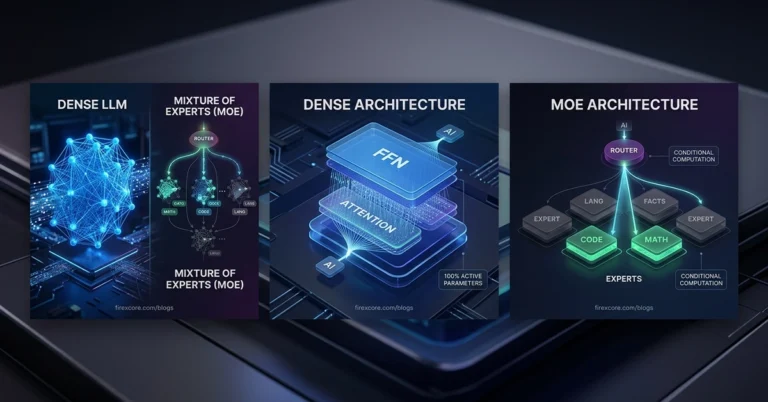
Granite 4.0 Tiny tackles these head-on with a sparse Mixture-of-Experts (MoE) architecture, Mamba-2-style layers, and an open-source ethos that invites innovation.

Unpacking Granite 4.0 Tiny’s Technical Wizardry
Granite 4 Tiny’s architecture is a blend of innovation and pragmatism, tailored for efficiency and versatility. Let’s dive into the nuts and bolts of its design and how it powers its two variants.
A Sparse MoE with Mamba-2 Dynamics
The heart of Granite 4.0 Tiny is its hybrid Mixture-of-Experts (MoE) structure, which uses 7 billion parameters but activates only 1 billion per forward pass. This sparsity slashes computational costs, making it ideal for resource-constrained environments like IoT devices, mobile apps, or small servers. Compared to dense models, MoE offers:
- Lower Energy Consumption: Critical for edge computing and sustainability.
- Faster Inference: Speeds up real-time applications like chatbots or code assistants.
- Scalability: Handles growing workloads without exponential resource demands.
The Base-Preview variant introduces a decoder-only architecture augmented with Mamba-2-style layers, a linear recurrent alternative to traditional attention mechanisms. Unlike attention-based models that scale poorly with input length, Mamba-2 ensures efficiency in long-context tasks, such as:
- Analyzing multi-page legal documents
- Summarizing hour-long meeting transcripts
- Answering multi-hop questions requiring deep reasoning
A bold design choice is NoPE (No Positional Encodings). Instead of fixed or learned positional embeddings, Granite 4.0 Tiny embeds position handling into its layer dynamics. This improves generalization across input lengths, ensuring consistent performance whether processing a tweet or a 10,000-word report.
Instruction-Tuned for Precision and Interaction
The Tiny-Preview (Instruct) variant builds on the base model with Supervised Fine-Tuning (SFT) and Reinforcement Learning (RL), using a Tülu-style dataset of open and synthetic dialogues. This fine-tuning makes it a standout for interactive, instruction-following scenarios, with features like:
- 8,192-token input/generation windows: Maintains coherence in extended dialogues or complex tasks.
- Multilingual Mastery: Supports 12 languages, from English to Mandarin, for global accessibility.
- Traceable Outputs: Decoder-only design ensures clear, interpretable results, vital for enterprise and safety-critical applications.
Benchmarks tell the story: 86.1 on IFEval (instruction-following), 70.05 on GSM8K (grade-school math), and 82.41 on HumanEval (Python code generation). These scores reflect Granite 4 Tiny’s ability to balance efficiency with high-quality outputs.
Pretraining Powerhouse
Granite 4 Tiny’s performance is rooted in its pretraining on 2.5 trillion tokens across diverse domains, from scientific papers to social media. This vast dataset ensures robust language understanding and adaptability, making it a versatile tool for varied applications.
Real-World Impact: Where Granite 4.0 Tiny Shines
Granite 4.0 Tiny’s compact size and robust capabilities make it a transformative force across industries. Let’s explore its applications and how it’s reshaping workflows.
Enterprise Automation: Streamlining Global Operations
Businesses can deploy Granite 4 Tiny for tasks like automated customer support, contract analysis, or market research. Its multilingual support and long-context prowess enable:
- Real-time translation of customer queries in 12 languages
- Summarization of lengthy reports or earnings calls
- Generation of data-driven insights for strategic planning
For example, a global retailer could use Granite 4 Tiny to analyze customer feedback across regions, producing actionable reports in hours instead of days.
Education: Empowering Students and Educators
In education, Granite 4.0 Tiny is a game-changer for research, tutoring, and coding. Its 70.05 score on GSM8K makes it a reliable math tutor, while its 82.41 on HumanEval supports Python programming education. Students can query it for:
- Explanations of complex concepts, like quantum mechanics
- Code snippets for projects, with step-by-step commentary
- Summaries of academic papers for literature reviews
Case Study: A university deployed Granite 4 Tiny in an online learning platform, reducing grading time for coding assignments by 40% and boosting student engagement with interactive Q&A.
Edge Computing: AI Anywhere, Anytime
With its low computational footprint, Granite 4.0 Tiny is tailor-made for edge devices like smart sensors, wearables, or autonomous vehicles. Imagine:
- A smart thermostat using Granite 4.0 Tiny to process user commands offline
- A drone analyzing environmental data in real time without cloud reliance
- A mobile app summarizing news articles on the go
Its efficiency ensures minimal latency and power usage, critical for edge applications.
Research: Accelerating Discovery
Researchers can fine-tune Granite 4 Tiny for domain-specific tasks, thanks to its open-source availability on Hugging Face. Its +5.6 improvement on DROP makes it ideal for multi-hop question answering in fields like medicine or physics. For instance, a biologist could use it to analyze genetic research papers, extracting key insights faster.
The Road Ahead: Granite 4.0’s Future
Granite 4.0 Tiny is a preview of IBM’s ambitious vision for the Granite 4.0 family. Upcoming variants are expected to offer:
- Broader Language Coverage: Supporting more languages for global inclusivity.
- Advanced Fine-Tuning Tools: Simplifying customization for niche domains.
- Enterprise Integration: Seamless compatibility with corporate systems like CRM or ERP.
- Enhanced Multimodal Capabilities: Incorporating image and audio processing for richer interactions.
IBM’s commitment to responsible, open AI positions Granite 4 Tiny as a leader in transparent, high-performance models. So, what does this mean for you? It’s an opportunity to harness AI that’s not just powerful but also accessible and adaptable to your needs.
Key Takeaways: Why Granite 4.0 Tiny Matters
Granite 4.0 Tiny is a compact AI revolution, blending efficiency, transparency, and performance. Here’s why it stands out:
- Unmatched Efficiency: Sparse MoE and Mamba-2 layers enable edge-ready performance.
- Versatile Applications: From enterprise automation to education, it’s a multi-tool.
- Open-Source Power: Full access on Hugging Face fosters innovation.
- Future-Proof Design: Sets the stage for IBM’s Granite 4.0 family.
Curious about Granite 4.0 Tiny’s potential? Explore it on Hugging Face and share your ideas in the comments!
Frequently asked questions.
Answers connected directly to this article and its subject.
01 What is Granite 4.0 Tiny?
Granite 4.0 Tiny is IBM’s compact language model for long-context tasks and instruction-following, released under Apache 2.0.
02 How does it differ from other LLMs?
Its MoE architecture and Mamba-2 layers make it efficient for edge devices and long inputs, with open-source transparency.
03 What tasks can it handle?
It excels in document analysis, code generation, multilingual dialogues, and math problem-solving.
04 How does it perform on benchmarks?
It scores 86.1 on IFEval, 70.05 on GSM8K, and 82.41 on HumanEval, with a +5.6 improvement on DROP.
05 Is it open-source?
Yes, both Base and Instruct variants are available on Hugging Face with full model weights.