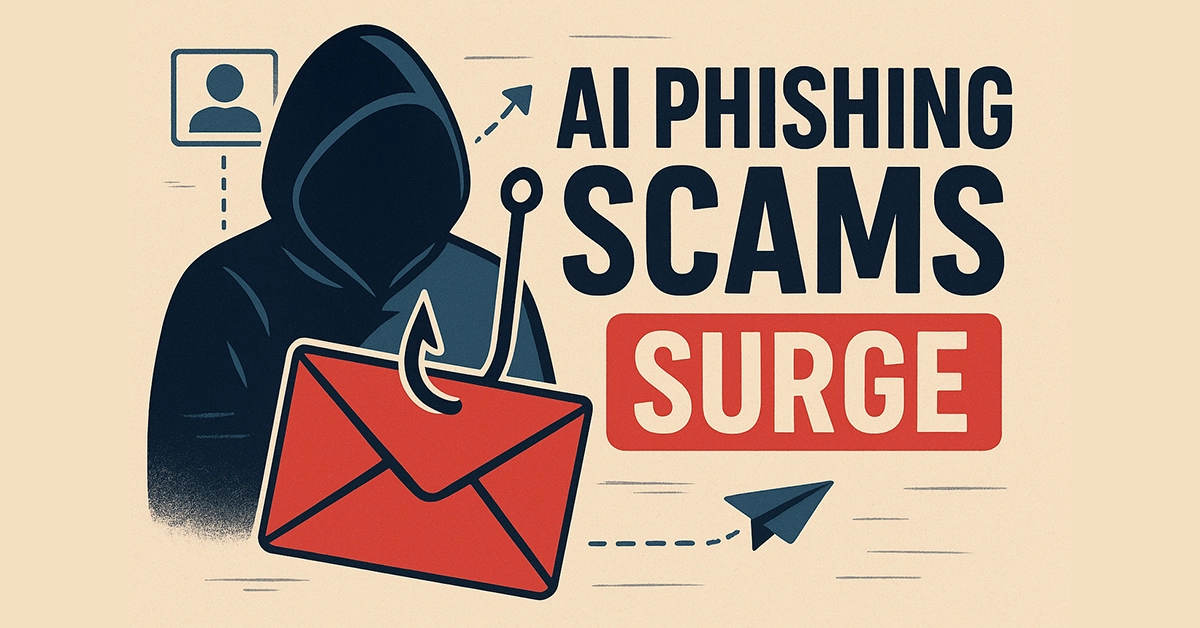
In the fast-paced world of cybersecurity trends 2025, AI phishing scams are emerging as a major concern for businesses worldwide. These sophisticated attacks use artificial intelligence to create highly convincing phishing sites and emails, making them harder to detect than ever before. Research reveals that AI-generated cyberattacks are now the most feared threat by IT employees and cybersecurity experts in 2025.
With tools like generative AI enabling cybercriminals to craft personalized and error-free scams, companies must stay vigilant. Traditional phishing attempts with obvious grammar mistakes are becoming obsolete as AI phishing scams 2025 evolve with unprecedented sophistication. This article dives into the rise of AI-powered phishing and offers practical phishing protection strategies to safeguard your organization.
What Are AI-Powered Phishing Scams?
AI-powered phishing involves using artificial intelligence to automate and enhance traditional phishing tactics. Unlike older scams with obvious grammar mistakes and generic content, these attacks generate realistic, personalized content that mimics legitimate sources with alarming precision.
Cybercriminals leverage AI for everything from creating fake websites to personalizing emails based on public data scraped from social media and professional networks. This makes AI phishing scams 2025 particularly dangerous, as they exploit trust in familiar brands, government entities, and personal contacts with unprecedented authenticity.
The Evolution of Cyber Deception Trends
The transformation from traditional phishing to AI-enhanced attacks represents a significant shift in cyber deception trends. Modern threat actors use machine learning algorithms to analyze successful phishing campaigns and optimize their approaches. These systems learn from failed attempts, continuously improving their success rates.
What makes current AI phishing scams 2025 especially concerning is their ability to bypass traditional email filters and security measures. The content appears authentic because it lacks the typical red flags that security software traditionally flags as suspicious.
The Role of AI Tools in Modern Phishing Campaigns
Tools like DeepSite AI and BlackBox AI are being misused to build replica sites that trick users into sharing sensitive information. Recent campaigns targeting Brazilian citizens demonstrate how threat actors exploit these platforms to construct convincing duplicates of official government portals, specifically impersonating Brazil’s State Department of Traffic and Ministry of Education websites.
These platforms add SEO poisoning to boost scam visibility in search results, making fraudulent sites appear legitimate in search rankings. The combination of realistic website design and improved search visibility creates a perfect storm for successful phishing attacks.
Generative AI in Email Phishing
Cybercriminals are using AI chatbots such as ChatGPT and DeepSeek to launch sophisticated business email compromise attacks. These tools help create convincing phishing emails with proper grammar, appropriate tone, and contextually relevant information that makes detection extremely challenging.
The AI-powered personalization extends beyond simple name insertion. Modern AI phishing scams 2025 analyze target behavior patterns, professional relationships, and communication styles to craft messages that feel genuinely authentic to recipients.
Emerging Threat Vectors and RATs in Phishing
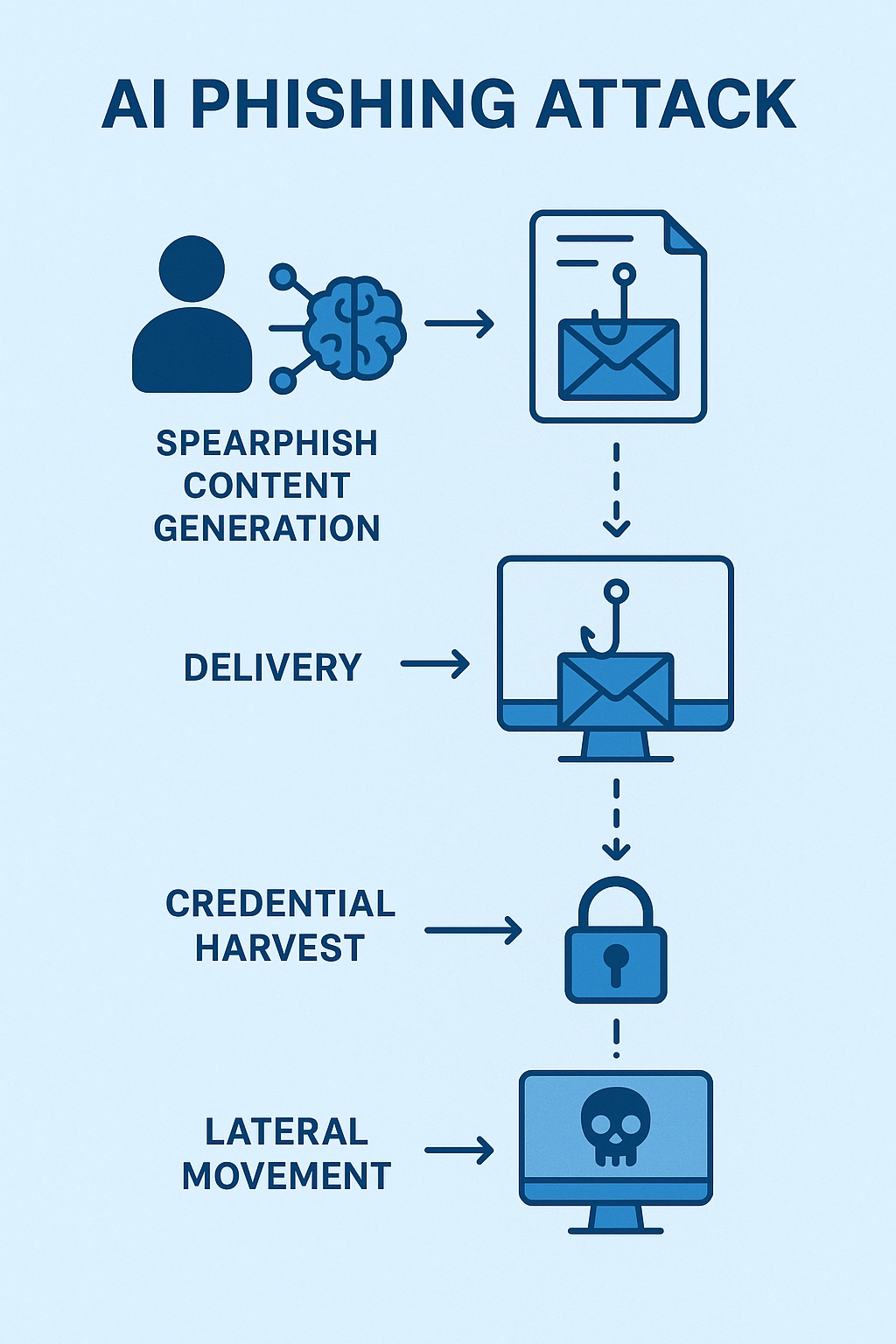
Remote Access Trojans (RATs) are increasingly being delivered through AI-enhanced phishing campaigns. These sophisticated malware programs gain unauthorized access to victim systems, often remaining undetected for extended periods while stealing sensitive data.
The integration of RATs in phishing attacks represents a significant escalation in threat sophistication. Attackers use AI to create convincing lures that encourage victims to download seemingly legitimate software, which actually contains malicious payloads designed to establish persistent backdoors into corporate networks.
Deepfake Technology in Social Engineering
Voice synthesis and deepfake videos are becoming integral components of AI phishing scams 2025. Cybercriminals leverage generative AI tools to craft convincing audio and visual content that impersonates trusted individuals, including executives and government officials.
Statistics show that 53% of financial professionals experienced attempted deepfake scams as of 2024, with a 19% increase in deepfake incidents in the first quarter of 2025 compared to all of 2024. This trend highlights the urgent need for organizations to adapt their phishing protection strategies.
Industry Impact and Financial Consequences
The financial impact of AI-powered phishing extends far beyond individual losses. Organizations face substantial costs from data breaches, regulatory fines, and operational disruptions. The sophistication of these attacks often leads to longer detection times, allowing cybercriminals to extract more valuable information before discovery.
Cybersecurity trends 2025 indicate that businesses in financial services, healthcare, and government sectors are particularly vulnerable to these advanced threats. The combination of valuable data and trusted communication channels makes these industries prime targets for AI-enhanced phishing campaigns.
The Human Factor in AI Phishing Success
Despite technological advances in security, the human element remains the weakest link in cybersecurity defenses. AI phishing scams 2025 exploit psychological principles and social engineering tactics with unprecedented precision, making even security-conscious individuals vulnerable to deception.
Traditional security awareness training becomes less effective against AI-generated threats because the quality and personalization of these attacks exceed typical training scenarios. Organizations must evolve their educational approaches to address these advanced threats.
Comprehensive Phishing Protection Strategies
Implementing effective phishing protection requires a multi-layered approach that combines technology, processes, and human awareness. Organizations must deploy AI-powered security solutions to combat AI-enhanced threats, fighting fire with fire in the cybersecurity arena.
Advanced email security platforms now incorporate machine learning algorithms that can detect subtle patterns in AI-generated content. These systems analyze communication metadata, linguistic patterns, and behavioral anomalies to identify potential threats that traditional filters might miss.
Employee Training and Awareness Programs
Modern security awareness training must address the specific characteristics of AI phishing scams 2025. Employees need education about the evolving nature of these threats and practical techniques for verification and reporting suspicious communications.
Regular simulated phishing exercises using AI-generated content help organizations assess their vulnerability to these advanced attacks. These exercises should incorporate realistic scenarios that reflect current cyber deception trends and threat actor techniques.
Technology Solutions and Best Practices
Implementing robust email authentication protocols such as DMARC, SPF, and DKIM provides foundational protection against domain spoofing and email impersonation. These technical controls create verifiable chains of trust that help identify legitimate communications.
Zero-trust security architectures become increasingly important in defending against AI phishing scams 2025. By requiring verification for every access request, organizations can limit the impact of successful phishing attacks and prevent lateral movement within networks.
Advanced Detection and Response Capabilities
Organizations should invest in AI-powered threat detection platforms that can analyze communication patterns and identify anomalies indicative of sophisticated phishing attempts. These systems provide real-time analysis and automated response capabilities that human analysts cannot match in speed or scale.
Incident response planning must account for the unique characteristics of AI-enhanced attacks. Response teams need specific procedures for handling cases involving deepfakes, sophisticated social engineering, and AI-generated malicious content that may require specialized forensic analysis.
For comprehensive cybersecurity solutions designed to combat modern threats, explore FireXCore’s cybersecurity services, which provide cutting-edge protection against evolving digital threats.
Future Outlook and Emerging Trends
The trajectory of AI phishing scams 2025 suggests continued evolution and sophistication in attack methods. Cybercriminals will likely incorporate more advanced AI models, including multimodal systems that combine text, voice, and visual elements for more convincing deception campaigns.
Regulatory responses to these threats are emerging, with governments and industry organizations developing new frameworks for addressing AI-enhanced cybercrime. Organizations must stay informed about these developments and ensure compliance with evolving security requirements and reporting obligations.
Preparing for Next-Generation Threats
Proactive security measures require continuous adaptation and investment in emerging technologies. Organizations should establish threat intelligence programs that monitor cybersecurity trends 2025 and provide early warning of new attack vectors and techniques.
Building resilient security cultures within organizations becomes paramount as AI phishing scams continue to evolve. This involves creating environments where employees feel empowered to report suspicious activities without fear of blame, fostering collaboration between security teams and business units.
Stay ahead of evolving threats by partnering with experienced cybersecurity professionals. Visit FireXCore’s comprehensive IT solutions for expert guidance in protecting your organization against advanced AI-powered attacks.
As cybercriminals continue leveraging artificial intelligence to enhance their attack capabilities, organizations must respond with equally sophisticated defense strategies. The battle against AI phishing scams 2025 requires continuous vigilance, advanced technology solutions, and comprehensive employee education programs.
For additional insights into current cybersecurity threats and protection strategies, consult resources from established security organizations such as CISA’s cybersecurity guidance and industry reports from leading security vendors.
The evolution of AI phishing scams represents both a significant challenge and an opportunity for organizations to strengthen their security postures. By understanding these threats and implementing comprehensive protection strategies, businesses can maintain resilience against the most sophisticated cyber attacks of 2025 and beyond.
Frequently asked questions.
Answers connected directly to this article and its subject.
01 What makes AI phishing scams 2025 different from traditional phishing attacks?
AI phishing scams 2025 are significantly more sophisticated than traditional attacks. Unlike older phishing attempts with obvious grammar mistakes and generic content, AI-powered attacks use artificial intelligence to create highly personalized, error-free emails and websites that closely mimic legitimate sources. They leverage generative AI tools like ChatGPT and DeepSeek to craft convincing content, analyze target behavior patterns, and even incorporate deepfake technology for voice and video impersonation. This makes them nearly indistinguishable from authentic communications, bypassing traditional email filters and human detection methods.
02 How are cybercriminals using AI tools like DeepSite AI and BlackBox AI for phishing?
Cybercriminals exploit legitimate AI website-building tools to create convincing replica sites that impersonate trusted organizations. For example, recent campaigns have used these platforms to build fake government portals mimicking Brazil’s State Department of Traffic and Ministry of Education websites. They combine this with SEO poisoning techniques to make fraudulent sites appear higher in search results, increasing their visibility and credibility. These AI tools enable attackers to quickly generate professional-looking websites without technical expertise, making phishing campaigns more accessible and scalable.
03 What are RATs in phishing attacks and why are they dangerous?
RATs (Remote Access Trojans) are sophisticated malware programs increasingly delivered through AI-enhanced phishing campaigns. These malicious tools allow cybercriminals to gain unauthorized remote access to victim systems, often remaining undetected for extended periods while stealing sensitive data. The danger lies in their ability to establish persistent backdoors into corporate networks, enabling attackers to monitor activities, steal confidential information, and potentially spread to other connected systems. AI makes RAT delivery more effective by creating convincing lures that encourage victims to download seemingly legitimate software containing these malicious payloads.
04 How can businesses protect themselves against AI-powered phishing attacks?
Comprehensive protection requires a multi-layered approach combining technology, processes, and human awareness. Key strategies include: implementing AI-powered security solutions that can detect AI-generated content patterns; deploying advanced email authentication protocols (DMARC, SPF, DKIM); adopting zero-trust security architectures; conducting regular employee training with realistic AI-generated phishing simulations; establishing robust incident response procedures; and investing in threat intelligence programs to stay informed about emerging attack vectors. Organizations should also consider partnering with cybersecurity experts to ensure their defenses evolve alongside the threats.
05 What role do deepfakes play in modern phishing scams and how prevalent are they?
Deepfake technology has become a significant component of AI phishing scams 2025, with cybercriminals using voice synthesis and deepfake videos to impersonate trusted individuals like executives and government officials. Statistics show that 53% of financial professionals experienced attempted deepfake scams as of 2024, with a 19% increase in deepfake incidents in the first quarter of 2025 compared to all of 2024. These technologies make social engineering attacks incredibly convincing by creating authentic-looking and sounding communications that can trick even security-conscious individuals. The rapid advancement and accessibility of deepfake tools make this trend particularly concerning for organizations worldwide.